How not to die from a DVT

We very sadly recently lost a member, who died as a result of a deep vein thrombosis, or DVT. A DVT is a clot that forms in the leg, but then travels in the circulation and blocks off a narrower blood vessel somewhere else in the body. Our greatly missed friend was someone who could walk, with a frame, but only just. A powerful frame, tall, with a bit of weight – these things put more pressure and constriction on the veins in a seated position. On his own admission, he didn’t drink much throughout the day. He hadn’t been able to access his physio or exercise in the gym for some weeks as awaiting a wheelchair accessible vehicle, and mobilising was a struggle – he was awaiting a baclofen pump.

We wanted to get everyone thinking about their own risk factors, and please, to take the necessary steps to help avoid this sudden and possibly fatal incident.

DEEP vein throbosis

The main cause of DVT is immobility – especially during or after surgery, but can occur without surgery. Things you can do to protect against DVT include:

  • regular brisk walking – not always possible I know! But even whilst sitting,
  • If possible, regularly circle your ankles, get into a ‘tiptoe’ position and then lift your toes off the floor whilst keeping your heels on the ground.
  • when resting, when possible, spend some time with your feet higher than hip height.
  • Stay well hydrated – this keeps the blood less sticky and less likely to clot.
  • Research on the benefits of wearing Thrombo embolitic deterrent stockings (TEDS) has shown that there is no benefit, unless you have recently had an operation.
  • However, if your legs are swollen, or you have had thrombophelbitis, you can talk to your GP about getting grade 2 or 3 TEDs on prescription. You may need to first have test with a hand held Doppler scanner, done by a nurse.
  • They are available in different colours, and in open or closed toe options.
    • They should be removed at bedtime and put on first thing in the morning. It is important to put them on before your legs start to swell in the mornings.
    • Stockings should be replaced every 3-6 months. Each time you should be measured again, just in case the size needs to be changed.
    • You should always have at least two pairs prescribed so that one pair can be washed and dried while the other is worn.
    • Do not tumble dry support stockings, as this may damage the elastic.
    • They can be made to measure if none of the standard sizes fit you.
    • Support stocking applicator aids are available if you are unable to get them on. You can discuss this with your pharmacist or nurse.

A DVT that is recognised in time can be treated to prevent further complications. So what to watch out for?

    • Pain and tenderness of the calf.
    • Swelling of the calf.
    • Colour and temperature changes of the calf. Blood that would normally go through the blocked vein is diverted to outer veins. The calf may then become warm and red.

If you have any of these symptoms, with no other explanation, seek medical help immediately, to be safe.

DVT


Fingolimod – be aware of this

Just a quickie – from Bart’s MS Blog by Gavin Giovannonni

ClinicSpeak: Fingolimoders need to be aware of opportunistic infections

If you are on fingolimod please be vigilant about infections, including opportunistic infections. #ClinicSpeak #MSBlog #MSResearch

“In response to an anonymous comment on the Natalizumab retinitis post yesterday. I think it is appropriate to warn all MSers on fingolimod to be vigilant as well about infections and opportunistic infections.”

“The two case studies below highlight that opportunistic infections and severe viral infections are an issue on fingolimod. The first case report below is of a near fatal case of herpes simplex virus encephalitis (HSVE). This is not surprising, in fact in the phase 3 TRANSFORMS trial there was a fatality due to HSVE in an MSer on fingolimod, albeit on the higher, 1.25mg, dose.”

HSVE

“The second case is of a MSers on fingolimod developing Kaposi’s sarcoma, which is due to a specific herpesvirus. Kaposi’s sarcoma is classified as an opportunistic infection and is seen most commonly in people with AIDS and in people who have had a transplant and are on immunosuppression. Although this patient had a lymphopenia (PML, I would predict the occurrence of other opportunistic infections in MSers on fingolimod.”

“One infection that can be screened for is HPV, the cause of cervical cancer. If you are a woman on fingolimod please make sure you don’t miss your regular cervical, or PAP, smears. If you live in a country in which this is not mandatory please ask your family doctor to arrange for this to happen. As always prevention is better than cure.”

Epub: Pfender et al. Reactivation of herpesvirus under fingolimod: A case of severe herpes simplex encephalitis. Neurology. 2015 May 8.

Epub: Tully et al. Kaposi sarcoma in a patient with relapsing-remitting multiple sclerosis receiving fingolimod. Neurology. 2015 May 12;84(19):1999-2001.

Primary Progressive MS drug trial recruiting – Laquinimod

MRI

This drug trial is now recruiting for people with PPMS, in London. It’s a drug with exciting possibilities, not a ‘repurposed’ medication.

Here’s what Professor Giovannonni of Barts hospital and http://multiple-sclerosis-research.blogspot.com has to say about Laquinimod:

“As you are aware I am very impressed by the laquinimod phase 3 results. Why? Laquinimod is a drug that does not have much effect on inflammatory MS disease activity, i.e. relapses and MRI activity (Gd-enhancing and new T2 lesions). Despite its weak anti-inflammatory effects laquinimod has an impact on disability progression, that appears to be independent of relapses and it slows the rate of brain atrophy. All this points to laquinimod having neuroprotective effects downstream of inflammation. It now appears that laquinimod may be working on glial cell activity and the innate immune system; laquinimod down-regulates the mechanisms responsible for the slow-burn we see in MSers. Are the laquinimod results reliable? Almost certainly they are; why? Mainly because there has been two large phase 3 studies showing the same effect. This makes  the chances of this being a chance result highly unlikely.”

and here’s another post about it from the pharma side:

http://www.drugdevelopment-technology.com/news/newsteva-and-active-biotech-enrol-first-patient-in-laquinimod-phase-ii-trial-for-ppms-4561605

and here’s the link to the trial site from NHS choices website.

http://www.nhs.uk/Conditions/Multiple-sclerosis/Pages/clinical-trial-details.aspx?TrialId=NCT02284568&Condition=Multiple%20sclerosis&pn=1&Rec=0&CT=0

Exciting opportunity if it feels like you have nothing to lose, but ALWAYS REMEMBER TO ASK THESE QUESTIONS!

Questions to ask when considering taking part in a trial:

What are the potential risks?
How many people/ what percentage have these risks
What are the potential side-effects?
How many people /what percentage get these?
What can be done if I do have a side effect or risk? Is it reversible?
What are the potential benefits?
What percentage have had these benefits?
How much of these had similar condition at a similar stage to me?
How long do they last?
Is more treatment necessary?
How much does it cost?
Will you give information either to me or to my doctor about what therapy I have undergone?
How will I be monitored? Eg scans, bloodtests etc
How often will I have to return for follow up? Is there a charge?
Will they pay my travel expenses?
How will I know if it’s worked? What’s the timescale for improvement?
Is there a placebo ( dummy drug) group? If I’m in the placebo group, and the real treatment group benefit, will I have the chance to change to the treatment group?
If I have the treatment during the trial, and benefit from it, will I be able to carry on with it long term?

All the best!

Miranda


Biotin for progressive MS – possible new treatment

Happy spring, everyone! Hopeful news for new treatments for progressive MS recently.secondary progressive MS

First up, Biotin. A new study using this common vitamin reported reduction in disability for 21 out of 23 participants with progressive MS.

Twenty-three consecutive patients were treated with high doses of biotin ranging from 100 mg to 600 mg/day (median=300 mg/day divided in three doses) for 2 to 36 months (average of 9.2 months).  Fourteen patients suffered from Primary Progressive MS and 9 from Secondary Progressive MS. Five patient had visual problems, and 18 patients  had problems with disability related to spinal cord involvement. Assessment was of visual measures, walking distance, EDSS, TW25, muscle strength testing and videotaped clinical examination in a subset of patients; also  fatigue, swallowing difficulties, dysarthria, Uhthoff׳s phenomenon and urinary dysfunction.

21 out of 23 participants showed evidence of improved disability, 2 to 8 months after starting treatment. This was an open study – in other words both the people with MS and their doctors knew what treatment they were receiving; which can bias the results.

Possible modes of action of Biotin were suggested to be: activating the Krebs cycle in demyelinated axons to increase energy production, and assisting in synthesisng the long chain fatty acids that are needed to produce myelin.

Conclusions, of course, are the ‘more research is needed’, and  luckily, two multi-centre double-blind placebo-controlled trials are currently underway.

But to understand more how this information can be used at the current time, let’s look into:

What is Biotin?

foods-high-in-biotin

Biotin is a form of vitamin B, present in many foods and available as a supplement  under many names, including  vitamin B7, vitamin H, biotina, biotine, and coenzyme R.

Biotin works by breaking down food into sugar that the body can use for energy; it’s important for healthy skin and nails, eyes, liver, and nervous system, and sold as a supplement to aid hair and nail growth, at strengths of up 10,000 micrograms.

In this study it was used in such a high dose – 100 – 600 miligrams – ( there are 1000 micrograms in 1 milligram)  that it’s counted as a drug and called MD1003, rather than a nutritional supplement.

Biotin exists naturally in many foods; highest sources shown below:

Interestingly those gut bacteria pop up AGAIN! – Most bacteria in the gut synthesise Biotin, it’s possible that humans make use of the biotin they create, and for those on long term antibiotics or medication designed to manage epilepsy ( and often used for pain in MS), and, in people with neurological conditions such as MS the ability to synthesis biotin can be compromised, and lower levels of biotin than usual were found in the cerebrospinal fluid in one study. Another reason to keep those good bacteria happy!

Food Serving Biotin (mcg) (32, 33)
Yeast 1 packet (7 grams) 1.4-14
Bread, whole-wheat 1 slice 0.02-6
Egg, cooked 1 large 13-25
Cheese, cheddar 1 ounce 0.4-2
Liver, cooked 3 ounces* 27-35
Pork, cooked 3 ounces* 2-4
Salmon, cooked 3 ounces* 4-5
Avocado 1 whole 2-6
Raspberries 1 cup 0.2-2
Cauliflower, raw 1 cup 0.2-4
*A 3-ounce serving of meat is about the size of a deck of cards

Of course, nobody is recommending people with MS go out and take these giant doses of Biotin themselves. However, Biotin is not known to be toxic.On the trial, there were 2 deaths, but from unrelated causes – one heart failure, and one pneumonia.  Oral biotin supplementation has been well-tolerated in doses up to 200,000 mcg/day in people with hereditary disorders of biotin metabolism (1). In people without disorders of biotin metabolism, doses of up to 5,000 mcg/day for two years were not associated with adverse effects (35). However, there is one case report of life-threatening eosinophilic pleuropericardial effusion in an elderly woman who took a combination of 10,000 mcg/day of biotin and 300 mg/day of pantothenic acid for two months (36). Due to the lack of reports of adverse effects when the Dietary Reference Intakes (DRI) were established for biotin in 1998, the Institute of Medicine did not establish a tolerable upper intake level (UL)for biotin (1).

From the MS_research blog of UCL:

Gavin Giovannoni commented:

Please note that OTC (over-the-counter) biotin is not the same as the high-dose, ultrapure, MD1003 formulation. Representatives of the company, developing the drug, have informed me that most OTC vitamin preparations have very little bioactive biotin in them. This is why I would not recommend using OTC formulations unless they are tested and certified to have bioactive biotin in them.

And another interested party added this information:

Doing some Googling, the best guess of what MedDay mean by ‘bioactive biotin’ is d-biotin, one of 8 stereoisomers of Biotin, and the only one to be biologically active (https://books.google.co.uk/books?id=iX3Bm85KQVAC&pg=PA105)

It seems to me that the question is therefore whether a given OTC formulation contain d-biotin or other isomers too.

From further Googling, some of the OTC suppliers/manufacturers claim that their product is d-biotin:

http://www.privatelabelnutra.com/biotin-10000-mcg-p-832.html
http://www.swansonvitamins.com/swanson-premium-biotin-5-mg-100-caps
http://www.toxinless.com/biotin

There is a facebook group where people share information about Biotin for Progressive MS, and presumably, where they have obtained it:

https://www.facebook.com/groups/BiotinForProgressiveMS/

The study itself is a good and interesting read:

Sedel F, et al.

High doses of biotin in chronic progressive multiple sclerosis: A pilot study.
Multiple Sclerosis and Related Disorders 2015;4:159-69.Read the full text

1) http://www.ncbi.nlm.nih.gov/pubmed/10577274
Cerebrospinal fluid levels of biotin in various neurological disorders.
Acta Neurol Scand. 1999 Jun;99(6):387-92.

LDN – taking a clear look at the evidence so far

Over the years, many people have asked me about LDN, and quite a few of my patients have been on it. I’ve always been open minded to it, but never been quite sure – sometimes initial euphoria has not been followed by people being free of disease activity, and then I’ve wondered if that euphoria has been due more to the action of the drug.LDN

There’s a huge amount of anecdotal evidence ( people’s stories) about LDN being used successfully in many diseases, especially auto-immune disease, and I remain open- minded, however, it was interesting for me to read this blog post of the clinical papers on LDN, compiled together here:

Low Dose Naltrexone Review for MS Reveals High Safety Profile, Mixed Results on Benefits in Multiple Studies

So I think I’m going to stick to recommending whatever drug therapy seems appropriate for you, along with a Plant based whole food diet, with as little saturated fat as practicable, 20g omega 3 cold pressed flax seed oil, high dose vitamin D3, sunshine, exercise, and meditation as per overcomingms approach; plus checking your personal food intolerances and reducing everything that causes inflammation – stress, toxicity, sugar, refined foods, pathogens, as per functional medicine. :0

Are your tablets destroying your brain? What to do about anticholinergics

OH NOOO!NOOO! I hate it when a drug that was a useful tool turns out to have really bad side effects!

In an ideal world, we’d all be drug free, of course, but hey – noone is taking this stuff for fun!

You may have seen in the news recently the reports linking drugs with an anticholinergic effect with dementia and cognitive problems. This type of drug includes over the counter anti-histamines for allergies/hayfever.  Many people with MS take anti-cholinergic drugs for bladder overactivity/urgency, which include:

Detrusitol / Tolterodine, Solifenacin / Vesicare, Oxybutnin / Lyrinol XL/Kentera patches, Fesoterodine fumarate / Tovias, or Darifenacin / Emselex

and many take a low dose of tricyclic antidepressants for nerve pain, which include

Amitryptilline, and its less sedating sister, Nortryptilline.

Awareness has been building about the link between anticholinergics and cognitive problems; in fact a review on the subject in 2009 found twenty-seven studies that met their inclusion criteria, of which, all but two  found an association between the anticholinergics  and either delirium, cognitive impairment or dementia. (1)

This month, however, the a new study on 3434 people provides the ‘strongest evidence yet’ that anticholinergic drugs may increase the risk for dementia in older adults.( 2)

All studies done on the effects of anticholinergics have been done in older adults  “There is no data on how these drugs may affect younger people, but I personally will avoid taking anticholinergic agents,” – Shelley Gray, author of the study.

What if you’re only on a low dose?

Unfortunately if that’s a continuous dose, it still counts. Eg 3 years of taking low dose medication with anitcholinergic effect for neuropathic ( nerve) pain counts as high use.

What to do if you’re on one of these meds?

Obviously, full blown dementia in old age is unlikely to be reversible. However, previous studies on people coming off anticholinergics found that the detrimental effects on thinking were reversible(3), so don’t panic!

What are the alternatives?

For the bladder, two of the alternatives I actually mentioned in a recent post: tibial nerve stimulation, and mirabegron,  a selective beta3 adrenoceptor agonist, which works in a different way to anticholinergics.  NICE has recommended mirabegron as an option for treating overactive bladder (OAB) “only for people in whom antimuscarinic drugs are contraindicated or clinically ineffective, or have unacceptable side effects”, which means that you may have to fight for it, or get the help of your continence service to request it, due to the difficulties these days in accessing medicines that are not the cheapest available.

As you will know, if you have urinary urgency with MS, you should never take medications for it before being seen and scanned by a continence nurse, as the problem can sometimes be cause by the bladder not emptying properly, and in this case, the drugs don’t work, they only make it worse!

If however, you’ve been assessed, and found to have a severely overactive bladder, one option, under urology, is to have botox injected into the bladder wall, which completely relaxes the bladder, and lasts for several months. You have to be willing and able to take on intermittent self catheterisation if necessary, and when it works, it can be a real life changer.

Non drug options?

One of the commonest (? rude?)- most common things that people report are being benefitted by hyperbaric oxygen at the Therapy Centre is bladder urgency.I don’t deal in ‘miracles’ but there’s a link in today’s telegraph online about it: http://www.telegraph.co.uk/lifestyle/11376969/The-miraculous-healing-powers-of-oxygen.html

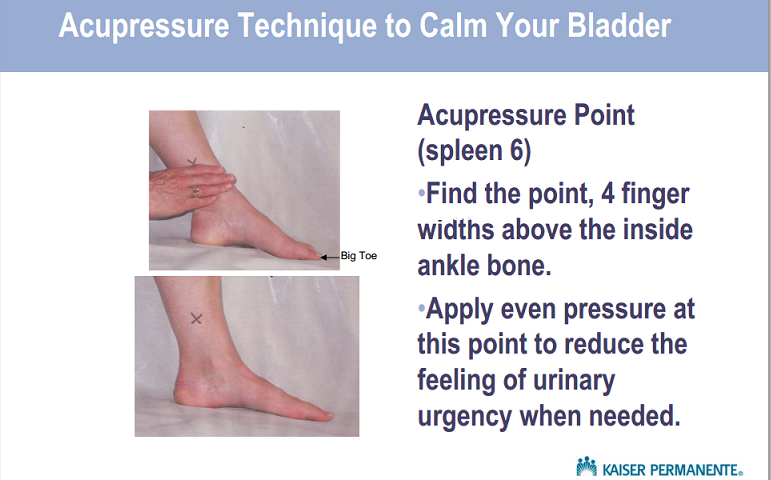
Other little pieces of magic can be reflexology or acupuncture. Small studies have  shown positive effects for treating this problem, and I have had patients reporting good results after seeing our reflexologists, Theresa and Lorna but non are large or robust enough to become very official ( the studies, not Theresa and Lorna! )

Here’s one of the main acupressure points for self help: acupressure for bladder
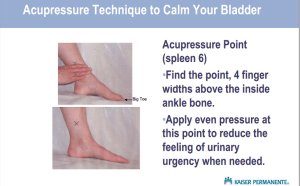
400-600mg of magnesium can sometimes have a calming enough effect to reduce bladder symptoms, and reducing caffeine and bladder retraining can also have a good effect. (4) Your best source of expertise on the bladder is your continence service nurse, and its a good idea to go back every couple of years to stay one step ahead of any bladder problems in MS.

What about nerve pain?

Luckily, there are other effective medications for distressing neuropathic pain in MS, the most commonly prescribed being Gabapentin, and its updated ( and more expensive) version, Pregabalin. Although there are, as with all drugs, possible side effects, the most common for Gabapentin being weight gain, they are not linked with the dangers to cognition that the anticholinergics are.

At the MS Therapy Centre, we are lucky to be able to offer APS Therapy, which has had a great result for many people, and the therapies Shiatsu and reflexology also have potential to help. So – if you find that you are regularly taking medication with an anticholinergic effect, have a think about the alternatives, and work with your GP to change your prescription, for a clearer head.

1) Clin Interv Aging. 2009; 4: 225–233. Published online 2009 Jun 9. PMCID: PMC2697587

The cognitive impact of anticholinergics: A clinical review

2)

Cumulative Use of Strong Anticholinergics and Incident DementiaA Prospective Cohort Study

Shelly L. Gray, PharmD, MS1; Melissa L. Anderson, MS2; Sascha Dublin, MD, PhD2,3; Joseph T. Hanlon, PharmD, MS4; Rebecca Hubbard, PhD2,5,6; Rod Walker, MS2; Onchee Yu, MS2; Paul K. Crane, MD, MPH7; Eric B. Larson, MD, MPH2,7
JAMA Intern Med. Published online January 26, 2015. doi:10.1001/jamainternmed.2014.7663
3)

4)     Hartmann KE, McPheeters ML, Biller DH, Ward RM et al. Treatment of Overactive Bladder in Women. Evidence Report/Technology Assessment No. 187. Rockville: Agency for Healthcare Research and Quality (AHRQ). August 2009. [Full text] [PubMed]

Weight loss on Overcoming MS Diet

Hell, Happy New Year!  Proud to be asked to blog for Overcoming MS recently, and replicate my blog  here. It’s inspired by my patients, of course, and the ups and downs you  experience in moderating your health by adjusting lifestyle factors to address the serious condition, MS, and this is the first in a series of 2!

OK, so one problem people worry about, is losing too much weight.

What is “too much” weight to lose? What is ‘normal’ ?

obesity www.mirandasmsblog.com

We know that the average weight keeps on rising, with the USA leading the way; the average weight for women in their 20s has increased by 13kg (29lb) since 1960 (1).

A recent Gallup poll found that the average American man’s weight was up 7kg (16lb) since 1980 to 88kg (196lb), and women’s up 6kg (14lb) to 70kg (156lb).

But the really interesting finding from that poll was that people’s perception of normal has also moved. The weights people stated as their ideal had shifted almost as much as their actual weights – men’s were up by 6kg (14lb) and women’s up by 4kg (11 lb). And despite being over their ideal weights by these figures, most people reported that their weight was ‘about right’. (2)

In our culture we’re used to seeing skinny models – in a weird stylised magazine world – but not skinny normal people, unless they’re unwell. But thin does not necessarily mean weak or unwell. In my 20s I spent quite a bit of time in India, and I remember being impressed at how incredibly strong the very skinny, but wiry, bicycle rickshaw drivers and train porters were…and feeling quite ashamed of my weak, chubby, western ways!

sleeping rickshaw driver www.mirandasmsblog.com

Perceptions aside, another thing to remember is that weight loss will probably stabilise.


Increase your good fats

Firstly, remember the OMS diet is not a low fat diet – it’s a low saturated fat diet. Here’s what George Jelinek kindly replied to me in an email one time:

“There is no real limit to the amount of fat we should be consuming. Remember it is not a low fat diet, but a low saturated fat diet. That said, if you eat a plant-based wholefood diet with seafood, it will be really hard to eat a high fat diet, almost impossible unless you eat bucket loads of avocados, nuts and oily fish every day. Most people just physically can’t eat that much of that sort of food because it fills you up so much.”

So it’s okay to double-up on the flax seed oil, increase your nuts, seeds, avocados and oily fish if you feel you are losing too much weight.

Eat protein-rich food

It’s obvious I know, but if you’ve been used to eating ‘meat and two veg’, it’s important not to slip into just two veg. For inspiration from a culture with a history of getting its protein from a plant based source, we can again look to India, which has around 500 miliion vegetarians, and perhaps the most sophisticated and ancient vegetarian cuisine, based on the ancient medical understanding of Ayurveda, and using anti-inflammatory spices and flavourings which complement the flavours of vegetables and grains.

Vegetarian Indian meals will always include a dhal or pulse dish, rice, a vegetable dish, and a chapati or pure. I don’t worry about making so much each time, but I always try to include a source of protein. Pulses are a cheap and filling way to do this, and my next post will be on the best way to cook pulses for optimum digestion, and digestion in general!

Eating enough

Need I say more?

Exercising for muscle mass

This subject deserves it’s own post I think. I’m going to direct you to a great blog I found called ‘No Meat Athlete’ by a vegan athlete Matt Frazier. Here he talks about the method he found effective to incerase muscle mass as a vegan, managing to put on 7kg (17lb) in six weeks. www.nomeatathlete.com/gain-weight-vegan

For the time being, all the best!


1)  Centre for Disease Prevention and Control USA

2)http://www.gallup.com/poll/150947/Self-Reported-Weight-Nearly-Pounds-1990.aspx

Tags: , ,

Fasting for MS & Auto-immune disease

Did you see this paper that came out over summer? http://www.sciencedaily.com/releases/2014/06/140605141507.htm

fasting

Explains how, in both laboratory mice and humans, fasting for 2-4 days at a time caused cells in the immune system to first be depleted, with damaged immune cells being destroyed,  being followed, once eating was re-introduced, by stem cell regeneration of new immune cells.

They liken the effect to ‘flipping a regenerative switch’, and the work has implications for people with auto-immune diseases aswell as those going through chemotherapy, or with lowered immune systems.

Wouldn’t it be great if those new immune cells were not programmmed to destroy the body’s own tissues?

Many ancient cultures and systems of medicine used fasting to treat illness, and there are in fact many benefits to intermittent ( obviously not starving yourself, but on & off) fasting, many of which you can read about in the popular book ‘ The Fast Diet’ by Micheal Mosely

I for one am not going to wait. I have found the benefits of intermittent fasting to be excellent since losing loads of weight on the Fast diet a couple of years ago, and I regularly don’t eat until night time. I don’t have an auto-immune disease, but my little 9 year old daughter does. Tonight I’m going to sit down with her and ask if, if I stay with her and we light the fire, get a duvet down, stack up the biggest pile of films and programs, and she can watch as much and as long as she likes, she would go for a 2 day fast to see what happens.

Watch this space.


Journal Reference:

  1. Chia-Wei Cheng, Gregor B. Adams, Laura Perin, Min Wei, Xiaoying Zhou, Ben S. Lam, Stefano Da Sacco, Mario Mirisola, David I. Quinn, Tanya B. Dorff, John J. Kopchick, Valter D. Longo. Prolonged Fasting Reduces IGF-1/PKA to Promote Hematopoietic-Stem-Cell-Based Regeneration and Reverse Immunosuppression. Cell Stem Cell, 2014; 14 (6): 810 DOI:10.1016/j.stem.2014.04.014
  2. Chia-Wei Cheng, Gregor B. Adams, Laura Perin, Min Wei, Xiaoying Zhou, Ben S. Lam, Stefano Da Sacco, Mario Mirisola, David I. Quinn, Tanya B. Dorff, John J. Kopchick, Valter D. Longo

    Prolonged Fasting Reduces IGF-1/PKA to Promote Hematopoietic-Stem-Cell-Based Regeneration and Reverse ImmunosuppressionCell Stem Cell, Volume 14, Issue 6, 5 June 2014, Pages 810-823

PML on Tecfidera and more

PML

PML

Important news if you are on, or considering the new oral drug Tecfidera ( also known as BG12).  On 22nd October Biogen Idec reported the first case of progressive multifocal leukoencephalopathy (PML) in a Tecfidera patient, who had been part of a clinical trial and was taking the drug for 4-1/2 years. PML is the rare but potentially fatal brain infection that is a serious possible side-effect of Tysabri, but until now had not been reported in people who had only taken an oral medication. 11 people taking Fingolimod have had PML; 10 of these had previously been on tysabri, and one is considered to have had PML before commencing fingolimod.

If you are on Tecfidera, the advice is not to panic. This patient, who died of pneumonia, had been suffering severe lymphopenia, a low white blood cell condition, for more than three years, which Biogen said was a risk factor for developing PML. A more in depth discussion about this is on neurologist Gavin Gionvannoni’s blog, here:

http://multiple-sclerosis-research.blogspot.com/2014/10/clinicspeak-pml-and-dimethyl-fumarate_24.html.

Now here’s the More …

Personal Health budgets   present

Not to be confused with personal budgets (!) which means you get to control the money for any social care, a Personal Health Budget is a one-off payment that can be used to pay for something that helps you in your life with a long term health condition. It could be something like an air conditioning unit, or piece of medical equipment, or it could pay for regular therapy or exercise classes, transport, or help to remain independent or at home. If you receive Continuing Health Care -( extra money to support your health if you have complex needs which are rapidly changing and you need nursing type interventions fairly often), then you now have the right to have a Personal Health Budget. There’s a lot of talk about how other people with long term conditions now have a right to ask for one – but sadly neither Bedfordshire or Northamptonshire are offering these to people with MS at this stage.

On a lighter note,

Reasons to be cheerful – part 1 tibial nerve stimulation

New and more effective treatments are becoming available for overactive bladder. If you’ve been through all the firstline treatments and are still suffering from urinary urgency, ask about Mirabegron, which is having great effects for some people.

Also becoming more easily available on the NHS is Tibial Nerve Stimulation, a treatment that developed from acupuncture, where a course of treatment using a tiny needle, inserted just behind the ankle, can calm down both an overactive bladder, and sometimes also be very effective for bowel urgency.

Reasons to be cheerful – part 2stereotactic radiosurgery

Another area that affects some people with MS, where advances are being made, is in treatments for Trigeminal neuralgia. If you have been plagued for a long time by this very painful problem, have a look at Sterotactic radiosurgery on the NHS choices website, or ask to talk to someone about this. http://www.nhs.uk/Conditions/Trigeminal-neuralgia/Pages/Treatment.aspx

Reasons to be cheerful – part 3 … wish I could sing it like Ian Dury…

Following the success of APS Therapy for many people’s painful conditions, and  noticing that many people have reported other unexpected benefits, we are now opening APS therapy at the Bedford MS Therapy Centre up for other problems that members may wish to use it for.                                                                                                                          The most noticeable and frequent ‘other’ benefit is improved length and quality of sleep, so for sleep problems.                                                                                                           Some people, though not all, report improvements in energy, so; fatigue.                  Significantly, 3 people have reported that they were having recurrent urinary tract infections prior to starting APS, which resolve when using it, so; recurrent urinary tract infections.

Anyone wishing to discuss this, please make an appointment to see Miranda or Emma.

and Part 4 –

Training going on apace all over the place! I’m doing the first presentation and training course for practitioners from the MS Centre on Saturday 1st Nov

Ovecoming MS evidence based approach to stabilising MS as per http://www.overcomingms.org in Birmingham on 6th November

Updating modern matrons on MS on 14th December, and, nudged by recent bad experiences one of our members recently had in hospital, Emma and I will be offering MS updates for hospital staff, and instigating working with hospital staff to improve the ‘pathway’ – ie -what happens to a person with MS when they interact with the NHS in Bedfordshire.

Also, if you don’t follow my online blog, you will have missed me banging on again about the importance of gut health etc. It’s all coming together, so watch this space for the ultimate plan!

Busy times! Keep well 🙂


Functional medicine to heal auto-immune diseases

It’s another ‘lazy’ blog, re-blogging a great piece called ‘How to stop attacking yourself. 9 steps to heal automimmune disease’ by Dr. Mark Hyman. Brings together a lot of familiar themes; the gut, leaky gut and how to heal it, food intolerances, and calming inflammation.

How to Stop Attacking Yourself: 9 Steps to Heal Autoimmune Disease

When he talks about infectious agents, I agree, but I tend to use SOS-Advance as it blitzes most things without destroying your natural gut flora.

I hope that soon I’ll get a chance to write something fresh – I’ve been photographing my cooking, so expect a recipe section soon!

All the best

Miranda