‘More Oxygen Please, it’ll do wonders for my relapse’

Just spotted this is on the blog http://multiple-sclerosis-research.blogspot.co.uk/.  It’s research done on EAE – the experimental animal version of MS they induce in rats for research purposes.

Here they used normobaric oxygen – presumably that’s just oxygen at normal pressure. In MS Therapy centres across the UK you can use hyperbaric oxygen ( oxygen given at pressure so that it permeates the tissues of the body more effectively), and many people feel a great benefit from it. I must dig out all the research that’s been done on it.

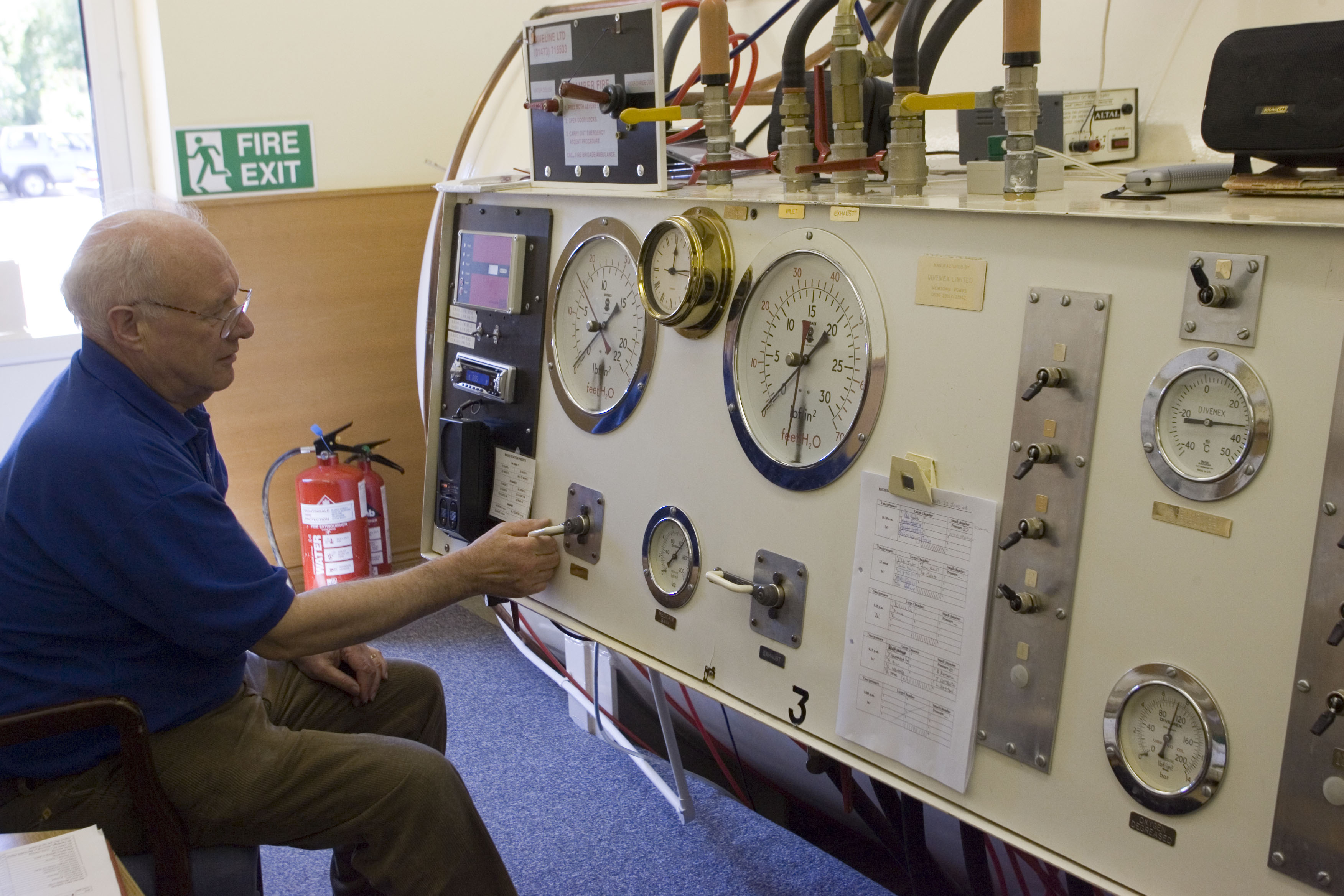
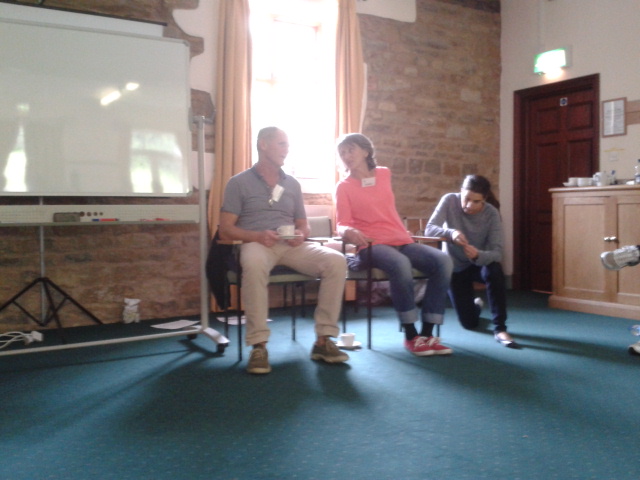
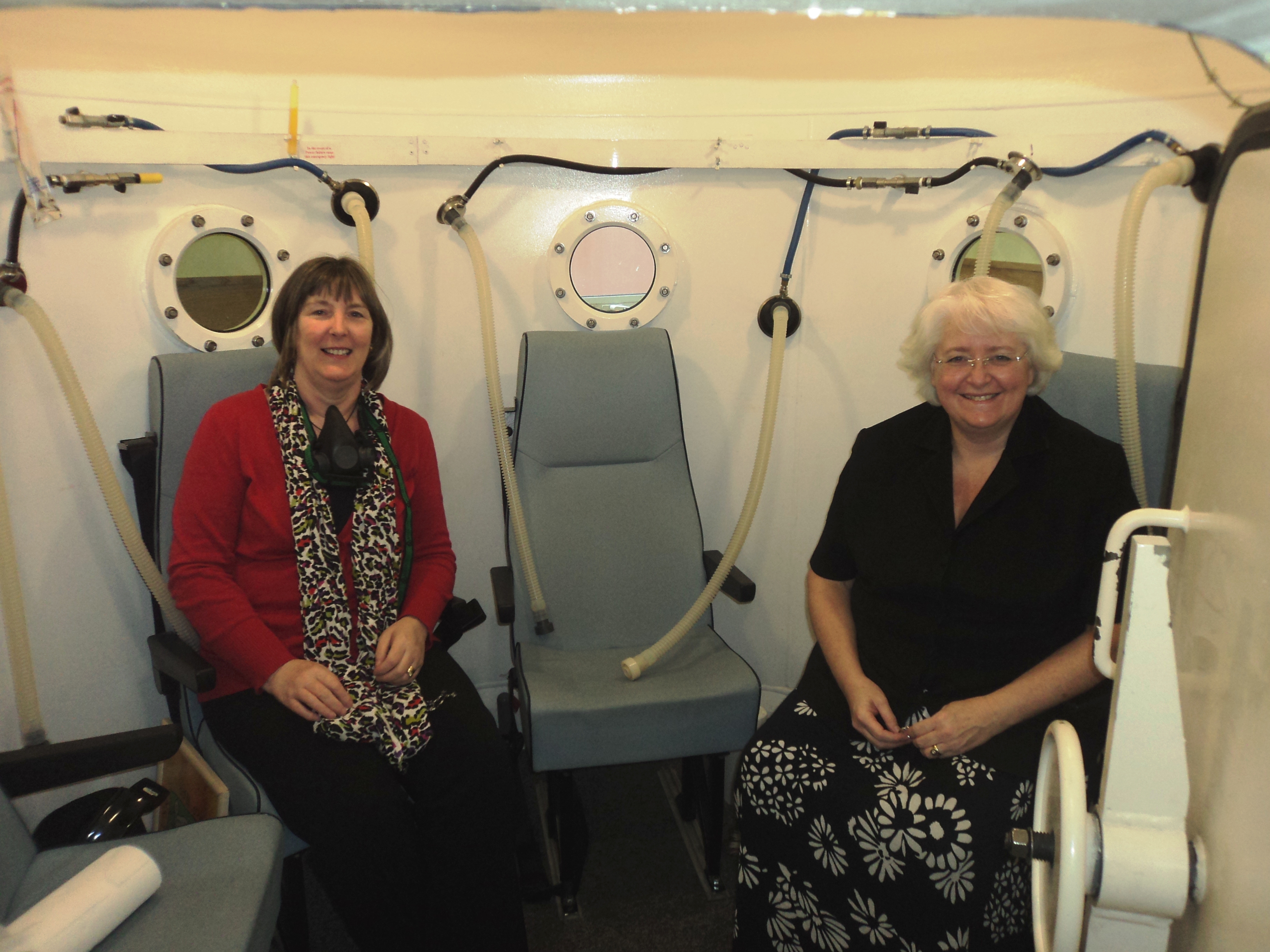
Here’s some people at the Bedford MS Therapy in the oxygen tank, and one of the volunteers manning the shiny knobs and buttons outside!

oxygen therapyhyperbaric oxygen therapy for MS

In terms of national guidelines, the research that’s been done in the past has not ‘cut the mustard’ to make hyperbaric oxygen a recommended clinical action. However, when you consider the practical and ethical difficulties of rounding up control groups ( who get fake oxygen), so that the research meets the standards required, it’s not surprising that this has not been managed.

More Oxygen Please, it’ll do wonders for my relapse

Posted: 18 Sep 2013 11:00 PM PDT

Davies AL, Desai RA, Bloomfield PS, McIntosh PR, Chapple KJ, Linington C, Fairless R, Diem R, Kasti M, Murphy MP, Smith KJ.
Neurological deficits caused by tissue hypoxia in neuroinflammatory disease. Ann Neurol. 2013 Aug. doi: 10.1002/ana.24006. [Epub ahead of print]

To explore the presence and consequences of tissue hypoxia in experimental autoimmune encephalomyelitis ((EAE), an animal model of multiple sclerosis (MS)).

METHODS: EAE was induced in Dark Agouti (DA) rats by immunization with recombinant myelin oligodendrocyte glycoprotein (rMOG) and adjuvant. Tissue hypoxia was assessed in vivo using two independent methods: an immunohistochemical probe administered intravenously, and insertion of a physical, oxygen-sensitive probe into the spinal cord. Indirect markers of tissue hypoxia (e.g. expression of hypoxia-inducible factor-1α (HIF-1α), vessel diameter and number) were also assessed. The effects of brief (one hour) and continued (7 days) normobaric oxygen treatment on function were evaluated in conjunction with other treatments, namely administration of a mitochondrially-targeted antioxidant (MitoQ) and inhibition of inducible nitric oxide synthase (1400W).

RESULTS: Observed neurological deficits were quantitatively, temporally and spatially correlated with spinal white and grey matter hypoxia. The tissue expression of HIF-1α also correlated with loss of function. Spinal microvessels became enlarged during the hypoxic period, and their number increased at relapse. Notably, oxygen administration significantly restored function within one hour, with improvement persisting at least one week with continuous oxygen treatment. MitoQ and 1400W also caused a small but significant improvement.

INTERPRETATION: We present chemical, physical, immunohistochemical and therapeutic evidence that functional deficits caused by neuroinflammation can arise from tissue hypoxia, consistent with an energy crisis in inflamed CNS tissue. The neurological deficit was closely correlated with spinal white and grey matter hypoxia. This realization may indicate new avenues for therapy of neuroinflammatory diseases such as MS.

Comment below is from the authors of the msresearch blog:
‘This study suggests that there is lack of oxygen in tissues during EAE, which has nothing to do with CCSVI, and if you give rats high amounts of oxygen they do better’

What if you’re doing everything right but you’re still getting relapses??

I was looking at the York test labs page today and noticed they have an offer on their Yes/No to immune response to foods product, until 7th Oct, so I thought I’d do a quick post on this subject…

You should know by now that I always recommend the Overcoming MS approach as the first thing to do if you even suspect MS…. along with weighing up the treatment options with your neurologist and doing whatever seems to be the right thing. But sometimes there’s more going on. If you have an undetected food intolerance, it can also play havoc with your immune system, causing inflammation on a large scale.

Food intolerances are often the result of a ‘leaky gut’ – the breakdown of the proper membrane of the gut wall, allowing undigested food molecules to pass into the blood stream, where they can be interpreted as intruders by the immune system.

Leaky gut can develop if the balance of bacteria in the gut is disturbed, and especially if yeasts proliferate, which can be the result of antibiotics, a poor diet and stress.

Food intolerances don’t have to be forever – sometimes just having a break from those foods, but also taking probiotics, digestive enzymes ( if appropriate) and preparations like slippery elm, can help to heal the gut again, so normal service can resume.

Here’s that the link to that offer, plus a copy & paste…

Food Intolerance Testing, Allergy Tests & Food Sensitivity Testing | YorkTest.

FirstStep Test

The YorkTest FirstStep Test quickly determines whether IgG antibody reactions to foods and drinks are detected in your blood or not.

If you get a positive result then purchase the FoodScan Programme (£245†), Food&DrinkScan Programme (£289†) or IBS Diet Programme (£289†) to discover what foods you have reacted to.

If you get a negative result then you do not have food-specific IgG reactions present and therefore no further testing is required.

Key benefits
  • Laboratory analysed yes/no test for IgG antibody reactions to foods.
  • Simple finger-prick home blood test that you post back to our laboratory.
  • If positive, you can choose to pay to progress onto one of our comprehensive programmes.
  • Price £9.99 Usual Price £19.99
    (offer ends 7th Oct 2013)

Overcoming MS retreat, July 2013

Hello! the madness of the summer is over (which I thoroughly enjoyed!) and at last I manage to blog about this amazing experience.

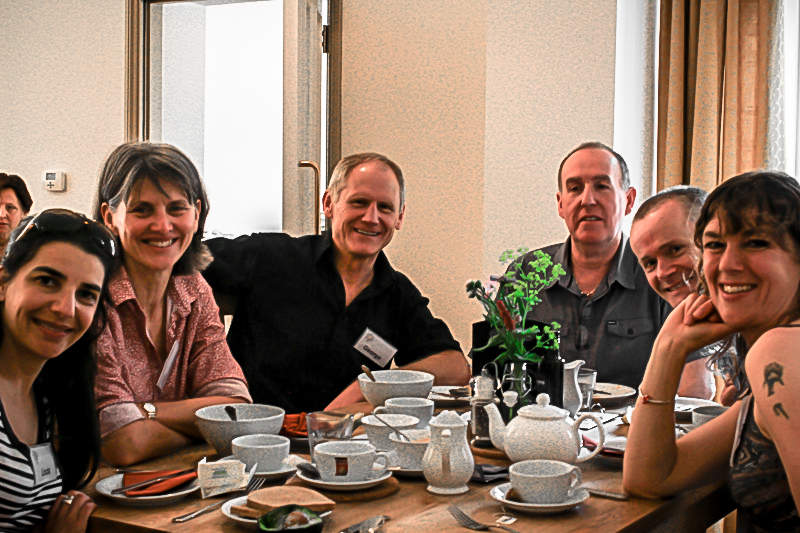
So in July, I attended the first UK retreat run by the Overcoming MS UK (OMS) organisation,  (now a registered UK charity), who allowed me to go so that I can hopefully help them to run workshops etc in the UK, to help people with MS understand the effects of diet and lifestyle modification on MS.george Jelinek et al, breakfast OMS meeting

From left to right, this is Linda Bloom, patron & founder of OMS UK, who has MS herself and is very well, Sandra Neate, Prof Jelinek’s wife, an emergency medicine consultant in Australia, Professor Jelinek, professor of emergency medicine and author & founder of Overcoming MS ( & very fit & well with MS), Gary McMahon , head of OMS UK, all round top bloke, with a business management background, but utterly committed to health, having helped his wife recover form serious illness using dietary & lifestyle measures, Dr Craig Hassed, an Australian GP and  medical  university lecturer, author & international speaker on mindfulness, and me.

What did I expect?

Well, I expected that I’d already know it all ( how arrogant!) …. I expected that I’d enjoy meeting the Professor and crew, but might shy away from too much socialising, not wanting to feel different as an MS nurse…. I expected I’d be bored in the evenings and took lots of work to do…. and that I might get a bit hungry on the fully vegan diet provided, and took a big loaf of bread for my bedroom… and I expected that 90% of the focus would be on diet & supplements, with a sliver of meditation thrown in for good measure….

What actually happened?

a) I didn’t know it all… & I’ll share my new understandings here,                                             b) I enjoyed meeting every person on the retreat, was inspired by the company of so many intelligent, stimulating individuals and couples who dare to think differently and think for themselves,  had a lot of fun, was never once bored, never did any work (!), and am actively staying in touch with the group via an email group because I want to!                     c) Was absolutely stuffed, because  the food was tasty, vibrant, delicious and really ‘stuck to your ribs’.                                                                                                                             d) I got my focus back through meditation, and realised how powerful the effects of even a boring daily grind of meditation that you don’t even want to do can be !!

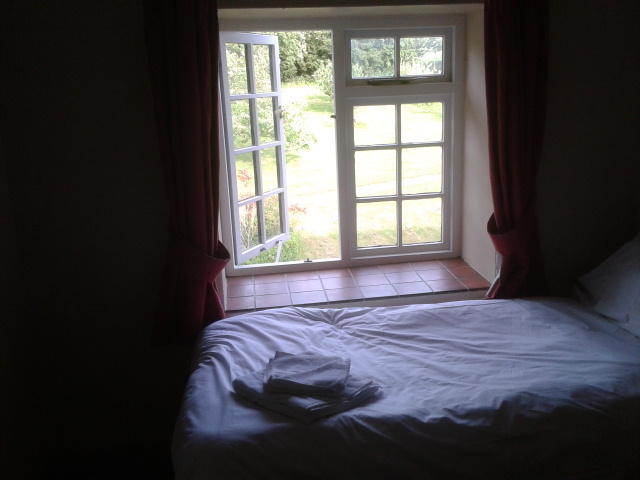
for this, it helped having a little cell, with no TV or internet connection….

launde abbey

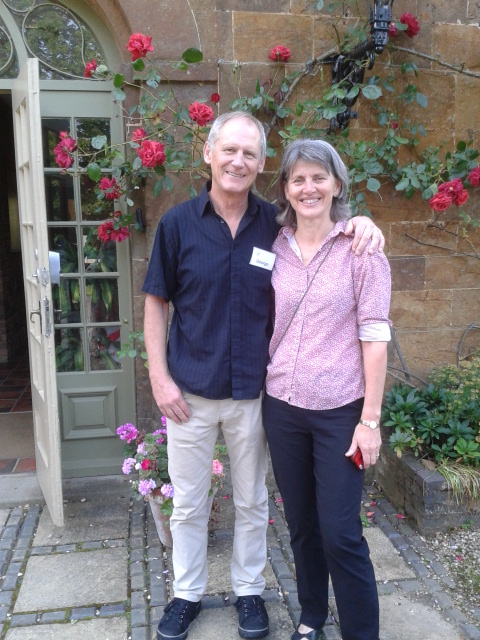
So, first impressions happened the evening before the retreat, when I went out for a meal with the OMS staff/trainers. Firstly, the Professor is seriously fit and healthy looking, and runs or swims daily more than I do in a week ( if not 2), and comes across as genuinely lovely, thoughtful, intelligent, educated, and kind person. He is obviously ably supported by his wife Sandra, who shares his qualities, diet & lifestyle, and took on the sessions about the structure & role of different fats.

Prof Jelinek & his wife Sandra


During the meal, in conversation, the Professor talked about how he would like to slow down his international work running the retreats ( he does already have his full time academic medical work), and I felt honoured to hear him relate this personal anecdote, with some emotion:

He said that he had recently experienced a relaxation of the drive to always be working to get his message out there, and that it had caused him to wonder and reflect. For some reason his age suddenly became very meaningful to him, but he couldn’t work out why — until he suddenly realised that he had now passed the age that his mother had been when she died, severely affected by MS (she took her own life). And so somehow, he had ‘made it’ , and proved to himself the value of the work he’s been doing all these years.

I’m not going to re-iterate all the points of the OMS approach here, as I’ve talked about it many times, and its all available for free on http://www.overcomingMS.org , there’s the books, and also a forum on the website where people can discuss points; I’m just going to go into some of the things I hadn’t quite nailed.

We sat in a circle around the outside of a large room, or on beanbags in the middle, and there were about 40 people. Most people had come with their partner, and some on their own. Teaching was very good quality, and we had lots of time to ask questions and discuss fine points.

prof jelinek teaching UK retreatHere’s the Prof teaching, and Linda in mid leap… she & Gary had organised and were running the show, she had her new baby in attendance, and during the week was constantly jumping up and physically running, fetching, carrying, leaping over boxes & beanbags, & looking radiant throughout.

Flax seed oil – in the most recent research carried out by OMS ,taking this trumped fish oil for having reduced disease activity. The best amount and way to take it is 2 dessert spoons drizzled over food ( or used to dip bread or in salad dressing) daily, and apparently, the best tasting is from http://www.flaxfarm.co.uk  I just got some, and can confirm, it looks like sunshine and tastes… nutty but fine. Going to see if I can get a discount for Bedford MS Therapy Centre….

Meditation

I’m no stranger to meditiation, having taken it up in my 20s, however, life had started getting on top of me, and when I attended the retreat, I was pretty stressed.

I was taken aback by the serious focus on meditation – every day, we started and finished the session with a half hour mindfulness meditation, led by Craig Hassed. I also did some of my meditation again in my room on a morning. It was hard! It is hard! But it is real – it has real, measurable mental and physical health benefits, and it’s worth doing every single day. By the end of the week I felt that I had met my real self again, and I was OK. Meditation  deserves a post of its own, which I’ll do some time, but for now, here’s some links to give a taste of the sort of thing we were doing. Scroll down to guided meditations, mindfulness meditation (1,2 or 3) with Craig Hassed.

http://www.calm.auckland.ac.nz/18.html 

It’s school run time!  but to stop this being delayed any further – TO BE CONTINUED!

Campath/Alemtuzimab/Lemtrada trials open for RRMS

If you have Relapsing Remitting MS, with 2 relapses in the past 2 years, and walk without a stick,  then it’s important to know about this.

Alemtuzimab, ( called Campath whilst being trialled at Cambridge for many years,) is a powerful immunosupressant, ( like chemotherapy), which is given as an IV infusion, has been shown to be very effective in stopping relapses and disease activity in MS – including progression of disability, as long as it is given before disability sets in.

In a trial of Alemtuzimab reported in 2008, compared to interferon beta-1a, alemtuzumab reduced the risk of sustained disability by 71%. There was also improvement of disability scores in the treatment group.  After 36 months the mean disability (EDSS) score in the alemtuzumab group had improved from 1.9 to 1.51 while that of the interferon group worsened from 1.9 to 2.28. After 5 years, those who had had alemtuzimab had 67% less disability, and 72% were relapse free, compared to 41% of the interferon treated group.

This makes it much more effective than the current disease modifying treatments ( DMTs), which can show reduction in relapse rates, but not prevention of progression.

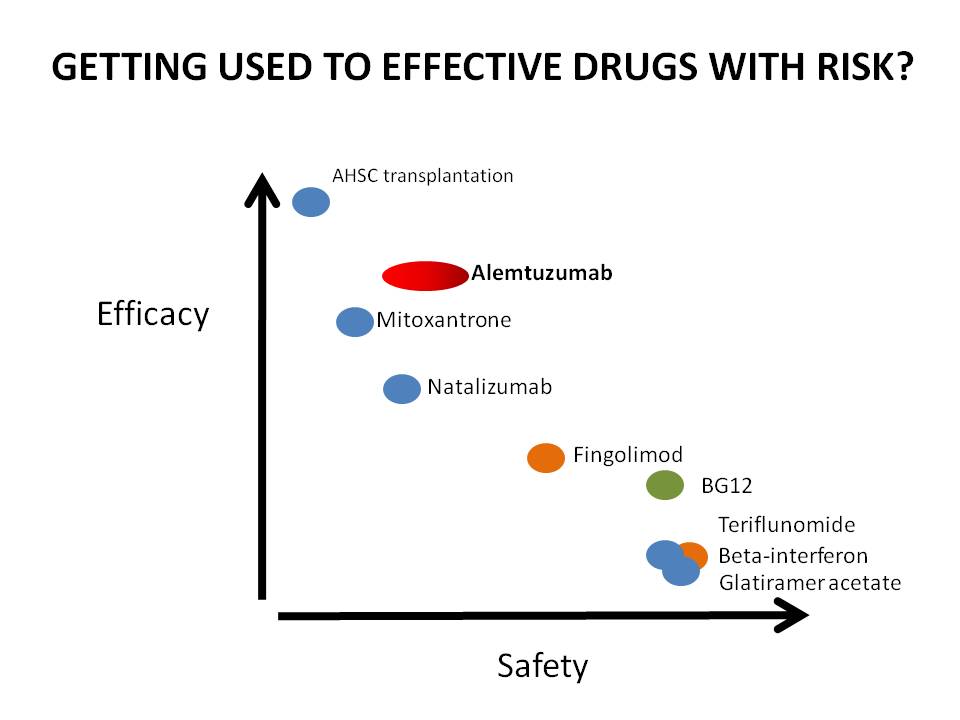
This slide, from Neurologist Joanne Jones, at Addenbrookes, shows the placement of current drugs ( including stem cell treatment) in relation to efficacy ( effectiveness) and safety.

EFFECTIVE DRUGS WITH RISKIf you can see this, stem cell is at the top on the left, indicating highly effective when it works, but risky. DMTs are at the bottom on the right – safe – but not so effective as the newer agents.

Nataluzimab is the generic name for Tysabri.

It also has more risk of serious side-effects than DMTs, so weighing up your risk of serious disability from MS against risk of contracting rare but serious side-effects, needs to be thought about very carefully.

So what are the risks of treatment? About 30% of people treated with Alemtuzimab get a different auto-immune problem at some point after treatment, and this is generally a thyroid problem, which can be treated. About 1 in 100 develop a blood clotting disorder, ITP, which can be treated if caught, but one person has died. In trials on Alemtuzimab, there was one death from lymphoma which may have been related, and there have been rare but potentially fatal kidney problems.

At present Alemtuzimab is going through the licensing procedure. Once it has been licensed, it may be rationed, and only offered to those who have relapsed on the normal DMTs.

However, the CAMTHY trials, which are testing to see whether a particular drug given with Alemtuzimab can make the treatment safer, are currently open to anyone with MS in the UK who meets the criteria. You need to have RRMS, have had 2 relapses in the past 2 years,  be able to walk without a stick, not have Insulin dependent diabetes or thyroid problems, be under 50, and not have had previous immunosupressant drugs ( but DMTs are ok)

Because I’m not involved in the research, and don’t have the time to analyze it thoroughly, I can’t present the risks and benefits any more clearly than this at this point. You can read about the work done so far here: http://www.colescambridge.org.uk/index.htm

and about how to be referred to Addenbrookes to discuss taking part in the trials, here:

http://www.colescambridge.org.uk/trial%20participation.htm, and if you are seriously interested and meet the criteria, you can discuss the pros and cons with one of the doctors running the trial, at Addenbrookes, after referral by your GP or MS Specialist Nurse. It may be worth reminding your GP that there is not a cost to them for this referral or treatment, as the trial has its own funding.  Worth very serious thinking about.

detox in MS

Following on from my last post about the thinking about viruses as potential drivers of degeneration in MS, here is some initial data from our experiment of using Omegawash as a strong natural detox agent.

At the MS Therapy Centre, Bedford,

12 people have tried taking this strong natural herbal and colloidal detox product, which claims to be anit-viral as well as anti-bacterial. anti-fungal and anti-parasitic. I asked people to fill in the MSQOL 54, a quality of life score with many different elements, both before and after.

Results: 1 person could not take it as it made them feel ill, & 1 for personal reasons; 1 I haven’t managed to follow up yet.

4 people took 1 bottle and did not notice any benefit or change, 2 of them have since had inflammatory activity and viral (coldsores etc) activity.

1 was in a very bad way when took 1 bottle as a ‘last resort’, with continual fatigue & very uncontrolled spasticity; this cleared up, although obviously, not cured of MS and its problems by any means, & MSQOL data has been lost.

4 people took a bottle, felt an improvement in their symptoms, and went on to supplement the 1 bottle funded by the MS Centre with 2 more bottles each.

Because the most noticable theme in people who felt they benefitted was an improvement in energy, this is the item I have looked at first.

Scores on the MSQOL for energy, out of 100, pre and post omegawash, for each of these 4, were:

Before  – 4/100     After  –   56/100

Before  – 24/100   After  –   52/100

Before  –  0/100    After –   72/100

Before  –  48/100  After  –   64/100

All of these 4 participants felt that the omegawash had made a significant difference to their energy levels. One of these had also made other changes over the same time period, starting hyperbaric oxygen, and changing her diet.

I have only just started to look at the questionnaire data.  I will report on this again once I have chased up my last participant, and looked at the other areas of the MSQOL, and identified any unifying factors in the people who reported benefit.

Today I could say that out of our tiny 10, there was a 10% drop-out rate, 40% no benefit, 10% possible benefit, and 40% reported significant benefits in energy ( and other areas of quality of life which I have yet to analyse). In the ‘responders’ group, there was an average of 39.5 point improvement in energy. Other reported benefits not included in the MSQOL included complete alleviation of bloating and vaginal thrush.

In the interests of science (haha!),’more research is needed’; but in the interests of ‘doing what you can asap as long as it’s not dangerous’, I thought I’d just let you know!

Omegawash is available from www.omegawash.co.uk.

As with all herbal products, you need to check that the ingredients are safe for you to use with your condition and whatever medications you take.

All the best, Miranda

MS Trust annual conference 2012

MS Trust conference – part 1.

In November I attended the MS Trust’s annual conference for healthcare professionals working in the field of MS.

I really enjoyed this year’s conference, and will summarise what I learned below.

The first speaker was Gavin Giovanonni, top MS researcher at Royal London Hospital. This is a pic from his blog, which you can follow at http://multiple-sclerosis-research.blogspot.co.uk/ http://multiple-sclerosis-research.blogspot.co.uk/. It includes ‘the mouse doctor’ (?) who is co-blogger.

vcm_s_kf_repr_150x126

to this talk resonated with everything I have been thinking for the last few years. You could sum it up as MS – which is more important – inflammation or degeneration? This argument has been recently explored in the article

‘Will the real MS please stand up?’ by Peter K. Stys, Gerald W. Zamponi, Jan van Minnen & Jeroen J. G. Geurts  – here’s a link to the full text article http://mssociety.ca/chapters/calgary/pdf/2012_Stys_507.pdf.

This article  weighs heavily on the side of looking at the importance of degeneration, so doesn’t really discuss the benefits of early aggressive treatment of inflammation.

Giovannonni’s blog calls this article ‘myopic ramblings’ ; it’s a dog-eat-dog world out there in academia, but Peter Stys has received funding from the MS Society of Canada to research progressive MS, which has got to be good news.

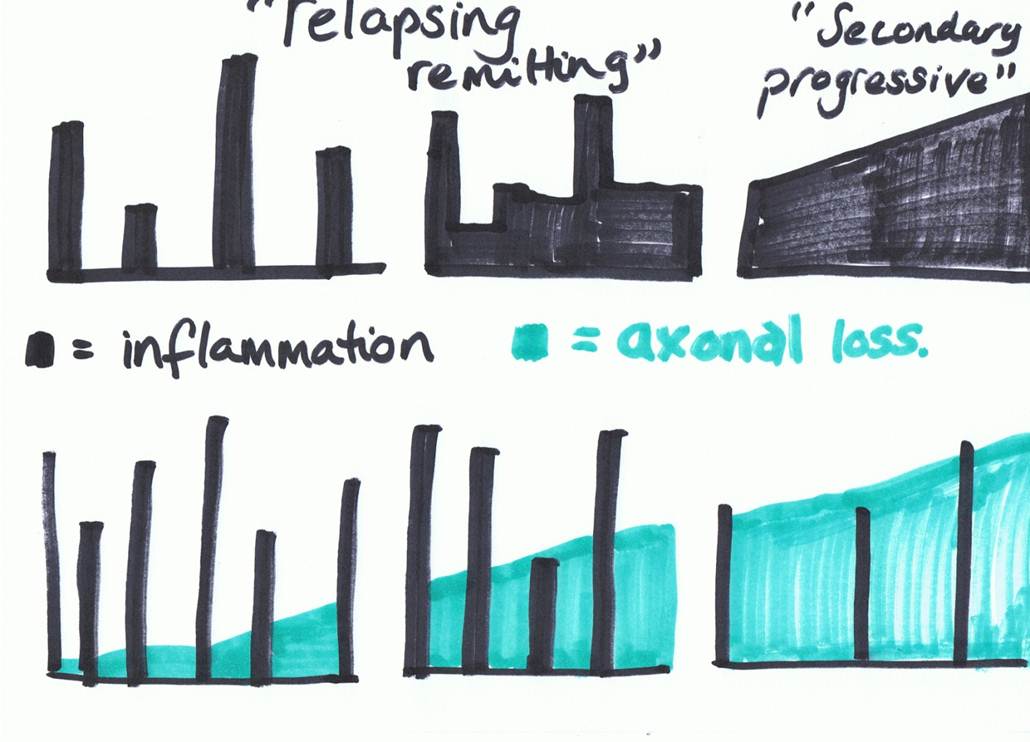
To illustrate what this discussion is about,  I’ve done a rough diagram based on one by Professors Coles & Compston Lancet. 2002;359:1221-1231

inflammation or degeneration

Basically, the tall skyscrapers represent inflammation –  relapses or new symptoms. They are the part of MS that pretty much all the research and medications for MS have always been aimed at; that’s why research trials always only want to recruit people with relapsing –remitting MS.

But the disappointment over the last few years has been realising that although the  disease modifying MS drugs can show a reduction in relapses, they have not been able to prove a reduction in the progression of MS.

The progressive element of MS is represented by the green block, and represents damage to and loss of axons, the long part of the neurons, or nerve cells.

The argument that Giovannonni presented, which is being mirrored by various thinkers around the world at present, is that perhaps research/pharmaceuticals have been focussing on the wrong part of MS. Perhaps the periods of inflammation in MS are the body’s reaction to a degenerative process that is going on.

As in this article, Giovanonni described his team’s interest in HERVs ( human entero-retrograde viruses – virus which are within the genes) and other virus which we can contract later in life; in particular, the Epstein Barr virus which causes glandular fever, and is part of the Herpes virus family. They want to see whether by suppressing these viruses, the driving force of the degenerative process might be taken out, and they have just received funding to do the preliminary research with anti-virals, which is great news.

It made me think again about looking into powerful natural anit-virals, and I’m going to speak to all the people who tried using some last spring to hear about  experiences and see how they’ve been doing since.

Another big factor in his research is Vitamin D; for a long time he has been an advocate of high dose vitamin D3 supplementation. I’ve got previous posts about this so won’t go into the pro side of vitamin D, BUT…

vitamin D

The subject got pretty confusing later when Professor Carolyn Young, Consultant Neurologist and Honorary Professor of Neurology

Walton Centre for Neurology & Neurosurgery, Liverpool led an 

Update on Vitamin D.

The professor warned us that this would be a challenging session, and it was. This is really important, as high dose vitamin D has become a mainstay of treatment for anyone who’s had their ear to the ground in the last few years, and neurologists have started to also take it seriously and recommend it.

She introduced us to all the formative research on vitamin D and MS; the Nurse’s study, which is scientifically important and excellent due to the enormous size of the sample –  92,253 women followed from 1980 to 2000) and Nurses’ Health Study II (NHS II; 95,310 women followed from 1991 to 2001. This study showed that having higher vitamin D blood levels, and taking supplements containing vitamin D had a strong effect of protecting a person from developing MS.

The US army study; likewise, great numbers and scope of years, showing 7 million army recruits from 1992-2004 and compared the vitamin D levels with their risk of developing MS.18 They found 257 new cases of MS in the group. There was a significant decrease in risk with increasing vitamin D levels among white, but not black or Hispanic people, who had lower vitamin D levels than whites. Levels of around 100nmol/L or more seemed to be protective, with almost a two thirds reduction in risk for those with these higher levels.

A good factsheet summarising research on vitamin D and MS is on the MS Trust website at http://www.mstrust.org.uk/downloads/vitamind.pdf

She then gave feedback on 4 or 5 more recent studies, where vitamin D supplementation ( mostly D3 but one study used D2) was given at various doses, over various timescales, none of which showed any influence on annual relapse rate, or level of disability at all.

We then went on to discuss what to make of this?

One point was that an association is not necessarily a cause

For example, low levels of vitamin D in the blood are associated with relapses in MS – but maybe they do not go towards causing it – maybe the low level of vitamin D is caused by the relapse or inflammation?

One point was that it may not be possible to extract the active ingredient – whatever that is – from the foods in order to make an effective supplement, and that sometimes other helpful substances in foods are responsible for the absorption of a nutrient.

I asked whether there was a difference between getting your vitamin D from the action of sunlight on the skin and a supplement? I didn’t get the full answer I was looking for, but Prof Young did make the point that there are other actions that the sun has on the immune system and inflammation that are generally beneficial.

People wanted to know what we should advise ‘while the scientists work it out’. Prof Young’s advice was that she felt that 1000IU should be the top recommendation a healthcare professional makes to a person with MS, and that it chould be checked that the person doesn’t have any kidney problems, as if they do, high dose vit D could cause kidney stones.

I’m going to ask Giovannonni on his blog/twitter/whatever what his response to this is, and also check what George Jelinek has been making of it.

I think if I have any thoughts on this so far, they are that perhaps people with MS need to try to get a s much Vit D as possible from foods and from the action of sunlight on the skin. In this country that only works between April and October, and when the sun is high in the sky.

It makes me wonder about sunbeds, I haven’t gone right into this, but just asking around, apparently you can get vitamin d from using a sunbed, but it has to put out UVB rays.

( and obviously, use sensibly, don’t get burned or overdo it)

I think I’m probably going to carry on recommending 5000IU, due to all the other research I’ve seen, but will be keeping my ear to the ground.

I’ve got more from the conference and will post as soon as I get time to write it up!

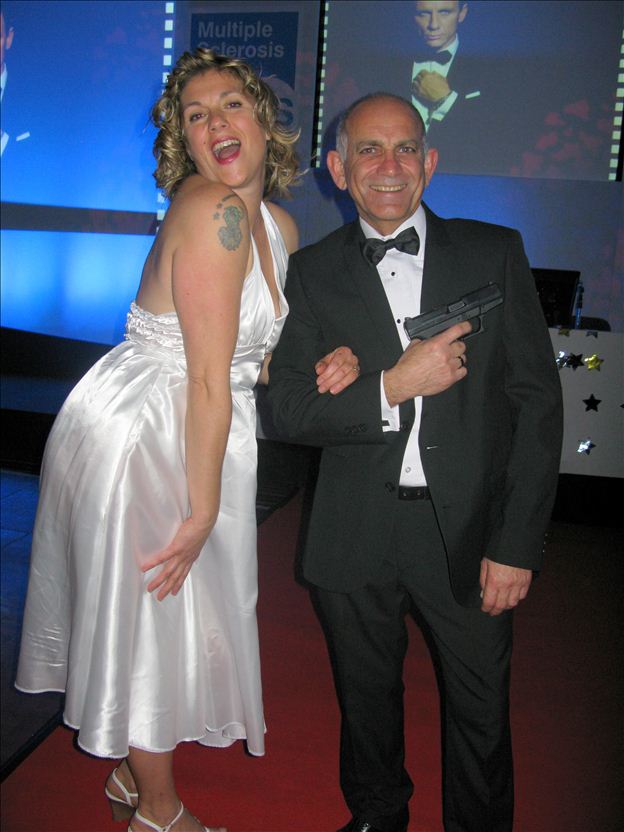
We also had a great time at the gala dinner fancy dress night, so In the meantime, this is for the Bedfordshire people – if you ever wondered whether your MS nurses were arch rivals or accomplices in crime, here’s something to confuse you further….!

vcm_s_kf_repr_624x832

haha

it’s not my normal look…

but I did enjoy being Marylin for the night!

Spasms and muscle stiffness in MS

Muscle stiffness and spasm (2)     Hi, can’t beleive it’s November already! I’ve been busy making presentations that I’m now going to try to post up here. This one is about muscle spasm and stiffness. It’s a powerpoint, so we’ll see if it works!

Yay! Ok, so if you click on the link, you can download the powerpoint.

On November 3rd I will be talking about muscle stiffness and spasm at the MS Society symptom management day in Flitwick, Beds, and I’m putting the full set of slides on my blog.Of course, It’s from an integrated perspective, so includes: what’s going on inside in muscle spasm & stiffness, ( an imbalance between the stimulating ‘excitatory’ and the calming ‘inhibitory’ neurotransmitters), the medical protocol, things that some people with MS report to be useful, and recommendations from trailblazers like Terry Wahls. I’m sure there’s loads of things I don’t know yet which aren’t covered, but so far it includes:
Physiotherapy
Active movement exercise
Stretching programmes
Avoiding trigger factors
Addressing MS as whole
muscle relaxant medication
Cannabis/cannabinoids
Key nutrients/supplements
LDN
meditation
botox/injectables
splinting
intrathecal baclofen
surgery
possibly APS therapy

Old posts: 2012: diet, supplements, Epstein Barr, detox, urine infections

2012

Supplements

The Therapy Centre is going to stock the supplements that I recommend most, at a discount of 15% off the RRP (which is fantastic news). So soon you will be able to buy Vitamin D3 5000 IUs, cold pressed flax seed oil 1000mg (Omega 3), and 2 varieties of an iron-free multi vitamin, mineral and nutrient supplement made from whole foods.  I got mixed up with a discount code previously, so if anyone used it and didn’t get the 20% discount, massive apologies, it went direct to the Centre, if you want to claim it back, see me!

Food

For people who’re eating food without saturated fat, but struggling with what to eat, I found a great website, www.fatfreevegan.com. Also, the OMS site is collecting more recipes that you can see when you log in. I too am collecting recipes, tips and ideas, so anyone out who has some good ones, please email or bring them in!

Hot topics

A hot topic for me this past year has been Epstein Barr (glandular  fever) virus and herpes virus (mainly herpes, cold sores and shingles in adults). Since I started asking people if they had these viruses, I’ve been shocked at how many MS people have one of these.  Recent research showing Epstein Barr still alive in MS lesions at post mortem, and    discussion around the fact that the virus lives on and may drive       inflammatory processes, got me wondering whether there could be a natural or herbal way of killing off the virus, and whether this would have any effect on the MS. So watch this space for the results of this latest     quest – natural viral detox!

Got a great tip the other day – did you know that the Kindle (£150 version) can read your books to you?  And for some people with    vision problems, the iPad is a revelation, so keep your eye on how technology can make life easier!

*******************

 December 2011

As an MS Nurse, I’m always looking for the best advice to give to my clients about being and stayingwell…..  MS is a disease with a genetic component, but our environment – the food we eat, the climate,     exposure to various    viruses, and stress, – have an impact on activating or suppressing our genetic susceptibilities. I often talk with people about their lifestyle and diet, and   depending on what I find out, I may recommend that they look at the work of Terry Wahls,  Ashton       Embrey, Ann Boroch or Sawyer & Bachrach , or get an overview and understanding of the different considerations and approaches by reading Judy Graham’s book.

But at the moment, if I had to choose just one piece of advice to give to    people with MS  who want to know what they can do to help their health, it would be to go to the http://www.overcomingms.org/website, and immerse themselves in the evidence based information there.

George Jelinek is the author of the book and website ‘OvercomingMS’ . He  is a medical doctor, and professor of emergency medicine in Australia, whose mother had MS and became very disabled, and who was diagnosed himself in 1999. Since that time, he  invested a vast amount of time and energy into examining the research on the various dietary, nutritional and lifestyle factors that have a  documented effect on MS, found evidence of the profound difference they can make, put the recommendations into practice and stayed symptom and relapse free, and has put this together into a simple to follow approach.

The work that Professor Jelinek has done in compiling and explaining, in simple language, the research on dietary fats and vitamin D is      incredibly helpful, and the fact that it’s all in one place, on the web or in his book,

Overcoming MS, an Evidence Based Guide to Recovery’ means that the   information stays cohesive and doesn’t become overwhelming

The cornerstones of the OMS approach are:

Diet and supplements

· Omega-3 fatty acid: 20g /mls  a day of flaxseed oil or fish oil, or the equivalent amount of fish

· Optional B group vitamins or B12 supplement if needed

Meditation – 30 minutes daily

Vitamin D

Sunlight 15 minutes daily 3-5 times a week as close to all over as  practical

Vitamin D3 supplement of at least 5 000IU daily, adjusted to blood level

Aim to keep blood level of vitamin D high, that is between150-225nmol/L (may require up to 10 000IU daily)

Exercise  –   20-30 minutes around 5 times a week preferably outdoors

 Medication

·    In consultation with your doctor, if a wait and see approach is not

appropriate, take one of the disease-modifying drugs (many may not need

a drug, and drug selection should be carefully weighed against side effects)

·   Steroids for any acute relapse that is distressing

·   One of the more potent drugs if the disease is rapidly progressive

The down side to the evidence-based approach, is that if anything – be it a therapy, foodstuff, supplement, drug, or approach, has not been      researched, or not researched to an adequate standard, then it can’t be counted. The evidence based approach prevents us from wasting money or time on useless therapies, but as Carl Sagan, famous America

astronomer, writer and scientist, famously said, ‘absence of evidence is not evidence of absence’.   So I’m still happy to suggest a person, for   example, who has extreme fatigue, might try Terry Wahl’s green   smoothies, or that someone might try hyperbaric oxygen, or even some of the commonly used symptom management drugs ( for instance for muscle spasm and stiffness) which don’t necessarily have a body of      scientific evidence for effectiveness behind them, but are used due to the effects that people report.

Recently I was really excited to see a research paper from the Australian Journal ‘Quality in Primary Care’, following up people who attended an OMS retreat and took on the recommended dietary and lifestyle changes. This study showed ‘ongoing improvements in health related quality of life after an intensive lifestyle modification course’, over 2 ½ years, that ‘ could potentially make a significant difference to the lives of many people with this condition’, and ‘contribute to the growing body of evidence that health promotion programmes and non-drug therapies for MS     patients have a beneficial effect.’

We hope to get Professor Jelinek over to the UK for a retreat in summer 2013, but you don’t need to do a retreat to take on this approach –all the research and recommendations are outlined on the website and in his book. Recently I met up with Lisa, the moderator from the website, and  two English women who  have done the OMS retreat, follow its recommendations, and enjoy good  health, and introduced them to the MS Trust. Now they are going to be introducing the work  to the MS specialist practitioners at the annual MS Trust conference for healthcare professionals in November. The goal of this is to help to promote the work of OMS in the UK – so that everyone who gets diagnosed with MS has the chance to find out about it, research it for themselves, and make their own decision.

************************

spring 2011

 This month I am mainly focussing on Urinary tract Infections (UTIs),   because they can really set you back when you have MS, and Prevention is better than cure!One cause of UTIs   with MS is the bladder not emptying properly. Not being able to start passing urine,  feeling there’s some left afterwards, passing a fair amount again quite soon after, ‘urgency’ and UTIs  can all be signs of incomplete emptying. This needs to be identified by ultrasound scan, which is done during an assessment by the continence service. For    Bedfordshire, Melanie  runs a clinic here once a month, or for Beds and Northants you can be seen in a local clinic , or have a home visit. Speak to me, a nurse or your GP to be referred

Be prepared! Burning, cloudiness or unusual smelling urine are classic signs of a UTI, but you can also dipstick test your urine at home. Buy Multistix or Uristix which include Leukocytes and nitrites,.Also dipstick if you have a relapse, as UTIs can be symptom free. It’s a good idea to help your GP understand how a UTI can cause MS to flare up, and be ready to prescribe an antibiotic at the first sign of infection. Get a sample taken in too, and the antibiotic can be changed lagter if necessary.

If you use a catheter, either a permanent or intermittent type, this also can introduce a route for infection. Obviously scrupulous hygiene is a must. People who get recurrent infections can try having antibiotics for the three days around a catheter change, or may even need to use a daily low dose antibiotic. For intermittent catheters, the type can make a difference – it’s important to use something that you don’t have to touch the tip of at all, and there are a couple out now which have a protective ‘introducer’( Hollister ‘Vapro’ is one), so the tip does not even touch the outer part of the urethra. Talk to your continence adviser.

if you get a UTI.

Don’t take any chances – Get a prescription of antibiotics!  If you take a course, top up with probiotics during and afterwards to help protect your digestion and health. Always finish a prescribed course of antibiotics, as stopping early can cause      antibiotic resistant bugs.

Drink plenty of water and pee frequently. Begin as soon as you feel the first signs and symptoms. Doing this can actually flush the bacteria out and wash it away. Avoid alcohol, caffeine, fizzy drinks, spicy foods,  and bubble baths etc, which can worsen symptoms. Cut out sugar to help your immune system fight back.

The most common bug causing UTIs is E coli, which lives in the bowel, but can cause persistent problems once it enters the urinary tract. So – what else can you do to help get rid of RECURRENT UTIs, especially if antibiotics are not working?

You may want to consider using Colloidal Silver  – silver particles suspended in water, which is a natural antibiotic.  Go to http://www.ukcolloidalsilver.co.uk/

“Citricidal’ from Higher Nature is a safe, natural antibiotic you can try at home.

Cranberry helps to acidify urine, and may help stop the bacteria form sticking to the bladder walls. Concentrated tablet form is best.

Some people have found D-Mannose to be effective in the same way – this is a simple sugar that E coli tends to latch on to. It’s available online but is quite     expensive.

All these remedies can be taken both in a higher dose for infection, and at a low dose as a preventative.

Be aware:

· Some sexually transmitted diseases have symptoms similar to urinary tract infections. See a doctor if you suspect that you may have an STD.

· See a doctor if you have a fever, chills, pain in the flank area, nausea or vomiting – especially if the symptoms develop rapidly. Also see a doctor if symptoms do not improve after 24 hours of self-care, or if you are unable to urinate at all.

*********************

December 2010

I hope everyone is reading the MS Resource Centre’s New Pathways (available to read at the MS Centre) at this exciting time in the world of MS treatments. The July/August edition updates us on the CCSVI debate, and lists all the places worldwide where you can be screened and treated. To learn more, I am attending the first International conference on CSSVI in Glasgow, in October, so I’ll be sure to report back.

The same New Pathways reports on a couple of fascinating small studies which fit in with this theory of poor circulation from the brain, and have worked for most of the people on the trial.

Inclined Bed Therapy

This involves raising the head of your bed by 6 inches. It’s certainly a lot cheaper than a private operation in Poland, as bed raisers, risers, or ‘elephant feet’ can be bought online for 12.99. Since CSSVI hit the headlines, this research has attracted fresh attention, and the author is carrying out a larger survey. You can get involved by going to www.thisisms.com/ftopicp-118378.html#118378

Update on Vitamin D

Thank you to the lady who came to let me know that she’s been feeling much better since she started on it. It is always good to get feedback; good or bad! D3 is still coming up as good, but newest research suggests it’s not just the vitamin D component that’s so important, it’s also the ultraviolet light, so more reasons to get outside as  much as possible. Had a good question regarding the vitamin D Should you take CALCIUM with it? I discussed this with the technical advisers at Nutri, who supply quality supplements to practitioners. Their view was YES, if you are on a dairy free diet, but not if not. Also, if you quote MSRC New Pathways when you make an order on the phone at      NutriCentre, you get 20% off.

My little break from clinic afforded me some reading time, and I’ve just finished ‘Healing Multiple Sclerosis’ by Ann Boroch. I’d recommend this to anyone who has taken lots of antibiotics in their life before    having MS, or has had recurrent yeast or fungal infections (like thrush or athlete’s foot) It’s main drive is about the association between chronic candida and MS; this isn’t a new theory, and most natural health    practitioners understand all about it. Getting rid of candida overgrowth is a long slog, but worth it if it applies to you, and I’m also happy to help anyone with this 3 pronged attack – kill yeast, don’t feed yeast, put good bacteria back! The author’s attitude to illness is a bit over the top at times, but the candida bit is good.

MS Centre Dietitian Bernice Chiswell adds

‘However, it should be born in mind that there is no scientific       evidence behind this. The diet is very restrictive and for the majority could prove more harmful than beneficial due to inadequate macro and micro nutrient intake’

Me:  The next book was ‘The MS Recovery diet’ The theory behind this is that food intolerances can initiate inflammatory reactions in the body, and it makes excellent and logical reading. It’s a similar approach to the Best Bet diet, but assumes that your intolerances are likely to be     individual,  explains how to find out, and has a large recipe selection to help get started. I recommend this to anyone with MS in the family.

Bernice Chiswell adds;

‘It should be born in mind that, although people with MS can have food intolerances, the only sure way to test for this is by food        exclusion and re introduction. Again, unnecessary exclusion can lead to unbalanced diets, plus be an added life burden to people who are already coping with disability and fatigue. The best bet diet is again not evidenced base.’

Me:  It’s a great month for books, too, as 3 new publications are out which all deserve reading – I have been waiting for ages for 2 of them:

Terry Wahls’ ‘Minding my mitochondria – How I Overcame       Secondary Progressive MS and Got Out of my Wheelchair’, which promises to be very scientific and convince everyone to eat loads of greens; ‘Overcoming Multiple Sclerosis; An Evidenced Guide To     Recovery’ by George Jelinek. Check out his approach on his website of the same name. Basically, super low fat Swank diet, a disease    modifying drug and meditation, and Judy Graham’s ‘Managing Multiple Sclerosis Naturally’. I haven’t read these yet but I will be doing and will report back!

Dietary approaches vary a bit, but some things remain constant – the less saturated fat, and the more brightly coloured veg & omega 3 fatty acids you eat, the more good you’ll be doing yourself.

Remember, if you’re taking something out of your diet, make sure you balance your nutritional needs. Our expert dietician, Bernice, can advise you.

Hello world!

This blog has grown from my work as an MS Specialist Nurse, 3 days a week at the MS Therapy Centre, Bedford, UK. I love my job, especially as I’m allowed the freedom to continuously explore ways you can optimise your health and life when you have MS, from both a ‘conventional’ and a more natural perspective.

Specifically, the blog is an expansion of my regular feature in our MS Therapy Centre newsletter. I’m going to upload all my old ‘posts’ so you can see what I’ve been thinking/learning about over the last few years; the new stuff will go in both places.

This last month has been an exciting one for me, new things that have happened are:

  •  Learning about APS Therapy ( Action Potential Simulation therapy)
  • Doing a teaching session on MS & the bowel on a Peristeen course;  I’ll try to upload it here.
  • Also I am still rounding up the feedback from those people who tried the natural detox product; more on that later!
 I should stick to one topic at a time.  So – APS Therapy
Recently met up with a friend, a nurse,who is now the leader of a fantastic pain management team in Hull.
She told me about the very very good results – people coming off medications completely – that a doctor working in a hospice in Hull had been getting with people with MS who had severe neuropathic pain, and severe muscle spasm, using APS machines. Their team had organised for  someone from the Dutch company who manufacture and supply the machines and training, to come and do a training day in Hull – which I managed to attend.

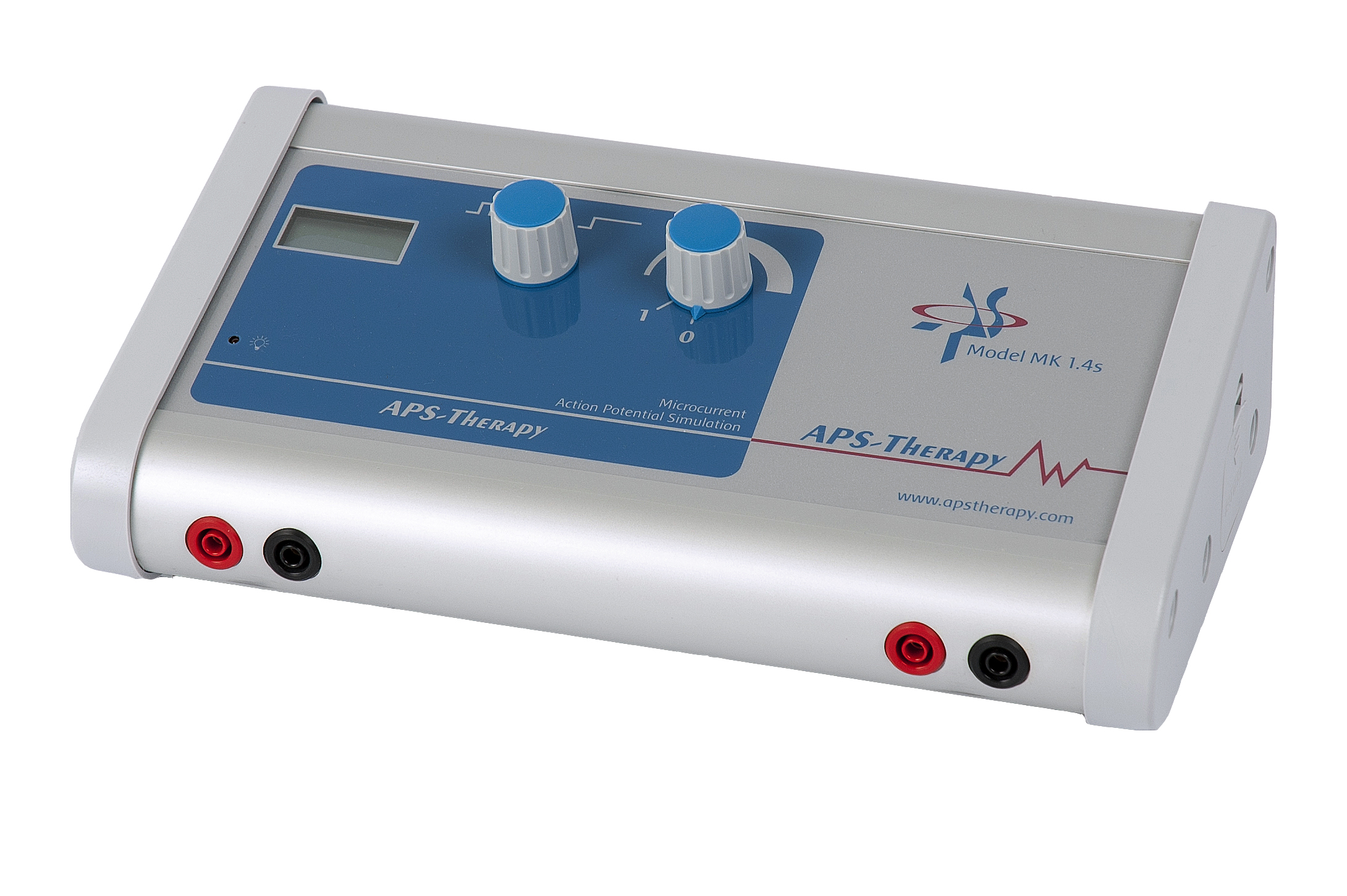
Basically this therapy looks a bit like TENS, but it’s a different type of electrical current. You put sticky pads on your skin, which are connected to the machine via wires, and then a direct current of micro-amps is directed to travel through the cells of your body, from one pad to the other.

APS machine for the MS Therapy Centre

The current simulates – ie is just like, Action Potential – which is the name for the way that electrical signals pass along a nerve. This apparently stimulates the release of more ATP, which is needed to create energy in the body, and also speeds up the detoxification from cells, and the result, after a period of treatment, is said to be reduced pain and increased energy.  So obviously I am excited!!

In Hull, a proper clinical trial is going to go ahead with a rehab team, pain management team and university in collaboration. In Bedford (!!) the doctor with the hospice experience has been kind enough to offer to come down and share her experiences of using this in clinical practice, so that we can find out

  1. how to use it
  2. how it works
  3. how we can use it effectively
  4. how we can use it fairly
  5. whether we can help people who benefit from it to fund ongoing treatment (?personal health budgets)
  6. whether we can add to the body of knowledge being gathered about it.
So this is happening on July 27th – can’t wait!
I will definatley post again on our experiences, and on everything else I think might be interesting to you!  All the best, Miranda